Dundon discusses ‘cheap’ accusations, roster-building, relocation, more
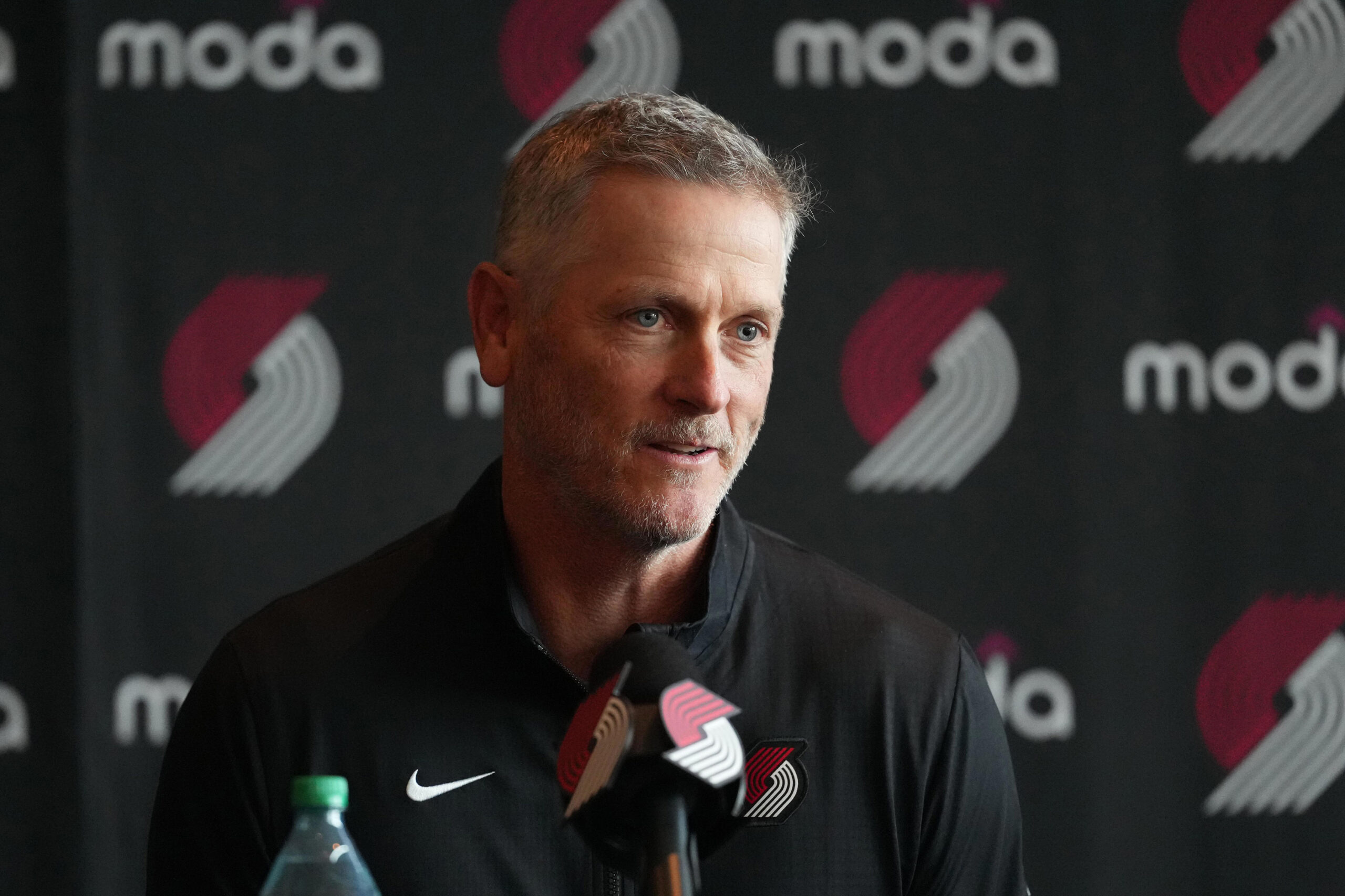
Portland Trail Blazers owner Tom Dundon has broken his silence on the swirling criticism regarding his leadership and the franchise’s recent cost-cutting measures since his acquisition this spring. In his first public remarks since his introductory press conference in April, Dundon sat down for an in-depth discussion on “Game Over,” a podcast hosted by Max Kellerman and Rich Paul. During the conversation, Dundon tackled accusations of being “cheap,” elaborated on his roster-building strategy, addressed concerns about the team’s potential relocation, and delved into a range of other pertinent topics.
It’s worth noting that Rich Paul, a prominent NBA agent and CEO of Klutch Sports Group, represents several key figures within the Trail Blazers organization, including players Jerami Grant, Shaedon Sharpe, and Scoot Henderson, as well as head coach Chauncey Billups and acting head coach Tiago Splitter.
Here are some of the most salient points from Dundon’s candid interview:
Willingness to Enter the Luxury Tax
When questioned about his inclination to spend into the luxury tax to bolster the Trail Blazers’ roster, Dundon expressed a clear willingness. He recalled a conversation with General Manager Joe Cronin around the trade deadline, even before the ownership officially transferred.
“Joe [Cronin] called me — and I don’t even know if it was allowed — he called me at the trade deadline. Technically, we didn’t own the team yet, and he had a deal — actually two different deals — but one in particular where we would have gone into the tax. And it would have been whatever, $20 million. I was fine with it. I want to run the business properly. But I want to win more than I want to make money. And that seems kind of obvious if you’re in this business, right? Winning is the only reason you do it. Why would you buy a team?”
Dundon further elaborated on the complexities of the NBA’s tax system, emphasizing that strategic investment is paramount for building a winning team.
“And so, obviously, a lot comes with staying in that tax in the NBA, right? They’ve made the rules in a way that it’s complicated. But to go in strategically because you can pick up a young player or have a chance to win, we would definitely do it. And I’ve got to think most people would. I don’t know many owners that wouldn’t do that. I don’t think we operate any differently. I hope we’re in a position where going in the tax means we have a chance to win. And if we have a chance to win, the tax is irrelevant.”
Addressing “Cheap” Criticisms
Dundon directly addressed the media narratives labeling him as frugal. He drew a parallel to his experience with his hockey team, the Carolina Hurricanes, highlighting that financial prudence doesn’t equate to a lack of investment in winning.
“My hockey team has been over the cap many times. They were the lowest in the league. They were at the floor when I bought ‘em. You can go over the cap in hockey. If you have a hurt player, you can replace them. So I’ve been over the cap multiple times because there was a rule that allowed you to go over the cap. And at the same time, when I walk out of a room, I turn off the lights. And so, my friends make fun of me all the time. They’re telling me how bad I am at being rich.”
He clarified his approach, distinguishing between wasting money and investing it wisely.
“I just don’t want to waste money. I want to invest it. I’ll have as many masseuses. I’ll have the best food. We’re going to take care of the players because it helps you win. It’s part of the deal. Some of the stuff about how we’re going to run the business — Portland spends $100 million more a year on their business than the Hurricanes do, not including players.”
Dundon pointed to the Hurricanes’ consistent success under his ownership as evidence of his effective management style.
“The Hurricanes, since I bought the team, have the first- or second-best record in the league. So, I’m just not going to waste $100 million, just because somebody wants to write an article calling me cheap. I’m just not going to do it. And so, it’s hard because I don’t think about a budget when it comes to the playing team and how to make sure we win. Some of the stuff that was blamed on money is actually not 100% true.”
The Two-Way Player Travel Decision
Dundon acknowledged a misstep regarding the decision not to have two-way players travel with the team for the initial games of their first-round playoff series. He admitted to a lack of understanding of NBA league norms compared to hockey.
“On traveling players, I just made a mistake. I just don’t understand the league. In hockey, we don’t travel extra people, because we’re not on vacation. We’re here to win, so we don’t want the distraction. The NBA seems to live with those distractions. It’s not how I think about it. So, you’ve sorta gotta learn what’s the differences between the two leagues.”
The franchise later reversed this decision following public backlash.
Hotel Checkout Incident
Regarding the team’s early checkout from their Phoenix hotel prior to a Play-In game, Dundon offered a detailed explanation, framing it as a logistical necessity and a cultural statement.
“The hotel story with the staff is an interesting story, I think, because, normally, when you travel, you get late checkout, right? … Because it was last-minute — going to Phoenix, there was no hotels — I guess Phoenix in March is a pretty popular place. So, I had trouble getting hotels. And the hotel really wanted us to be out early because they needed the rooms. And so, they wanted us to pay for a second night. And so, we did that for the coaches and the players. But we got them to let us leave at 1 o’clock. And I had a room at the hotel. I was there. So, I’m like, lunch starts at 1:45. We have a huge ballroom with this really nice lunch for everybody. So, I said, ‘Look, we’ll do the players and the coaches. We’ll stay. We’ll pay the extra night. For the staff, we’ve got this big ballroom with food. We’ll go down there and work.’ And everyone was down there. I was down there. I actually learned a lot during that hour, because I got to talk to some of the training staff, etcetera.”
He firmly stood by the decision, viewing it as a reflection of his desired team culture.
“I would do it again. I think it’s actually pretty stupid to think that people who are there to work, who are being fed, and 45 minutes later — they weren’t in the lobby — they brought their bags down in the room right by where the bus was, right next to my bag. And we sat down there and talked. And if that’s too hard for people, I’m not right for them. I want that culture.”
Relocation Prospects
Dundon emphatically addressed the speculation surrounding the potential relocation of the Trail Blazers. He drew upon his experience with the Hurricanes, emphasizing that his intention was to acquire the Portland franchise, not to move it.
“When I bought the Hurricanes, all I heard — because I was from Texas — we were going to move the team to Houston. Moving a team is difficult. … We didn’t move the Hurricanes. We ended up getting a deal done. We went through the same thing in Portland. Before I even bought the team, I had an agreement with the city and the state. We had an agreement in principle. They’ve already approved half of it. Assuming that all gets done, then this is a non-story. So, for me, it’s never been really a thing. We didn’t buy the team to move it. We bought the Portland Trail Blazers.”
Future Support and Arena Improvements
Looking ahead, Dundon expressed confidence in resolving any future challenges related to city or state support for funding agreements. His immediate focus, he stated, is on securing a lease extension and renovating the team’s arena.
“We would deal with that if it ever comes up. But, obviously, we have to solve problems when we have problems. Today, the problem we’re trying to solve is just to get a lease extension and get the building renovated. And those are fun things to do, right? Making the building better and adding some energy to that building. Those are things I enjoy doing.”
Dundon also touched upon other topics during the extensive interview, including the controversial decision regarding free T-shirts versus towels during the playoffs and his reaction to Coach Billups’ arrest in October.